
Mariposa • Mexico
IFM
Sustainable management enhanced across 16,000 hectares of community forests through improved fire control and local timber processing.
Read details


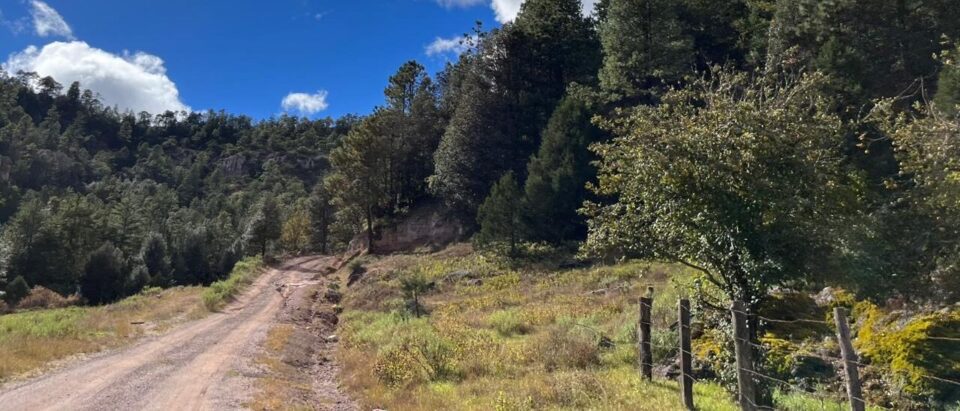
In March 2026, I spent a week in Durango, in the Sierra Madre Occidental, visiting the three communities that make up the Mariposa Improved Forest Management project: Yesqueros, San Ignacio, and La Soledad, 16,000 hectares of community-owned forest in total. I walked the land with Hector and Abraham, the two forestry engineers responsible for the project’s technical monitoring, who’ve worked in the area for over twenty years. What I came back with is less a story about carbon methodology than about who actually manages this land, and why that matters for how long the project lasts.
In Yesqueros, the first community I visited, I met its newly elected leader Ruben Estrada, notably young for the role. That’s a break from what came before, where community leadership had typically sat with an older generation. It matters for a reason that has nothing to do with symbolism: the communities’ own diagnosis of their biggest structural problem is that young people leave, because there is no local work for them. And when the people who would normally inherit the knowledge of managing this forest (fire prevention, species selection, harvesting rotations) leave for the city instead, that knowledge does not transfer. It is lost within a generation.
“It’s had a very positive impact, because it gives us jobs. It helps us not have to migrate elsewhere, since it gives us work and stability here, taking care of our own forests.“
– Ruben Estrada, Yesqueros community leader
What several people told me, unprompted, is that the project has started to change that calculation. Forest management work tied to Mariposa is one of the few sources of local employment that lets a young person build a life without leaving the community. Ruben, who is also a forestry engineering student, described it this way: “It’s had a very positive impact, because it gives us jobs. It helps us not have to migrate elsewhere, since it gives us work and stability here, taking care of our own forests.” That’s not a side benefit of the carbon project, it’s close to the condition for the project’s own continuity: a community that loses its younger generation loses the people who will eventually run this land’s management themselves.
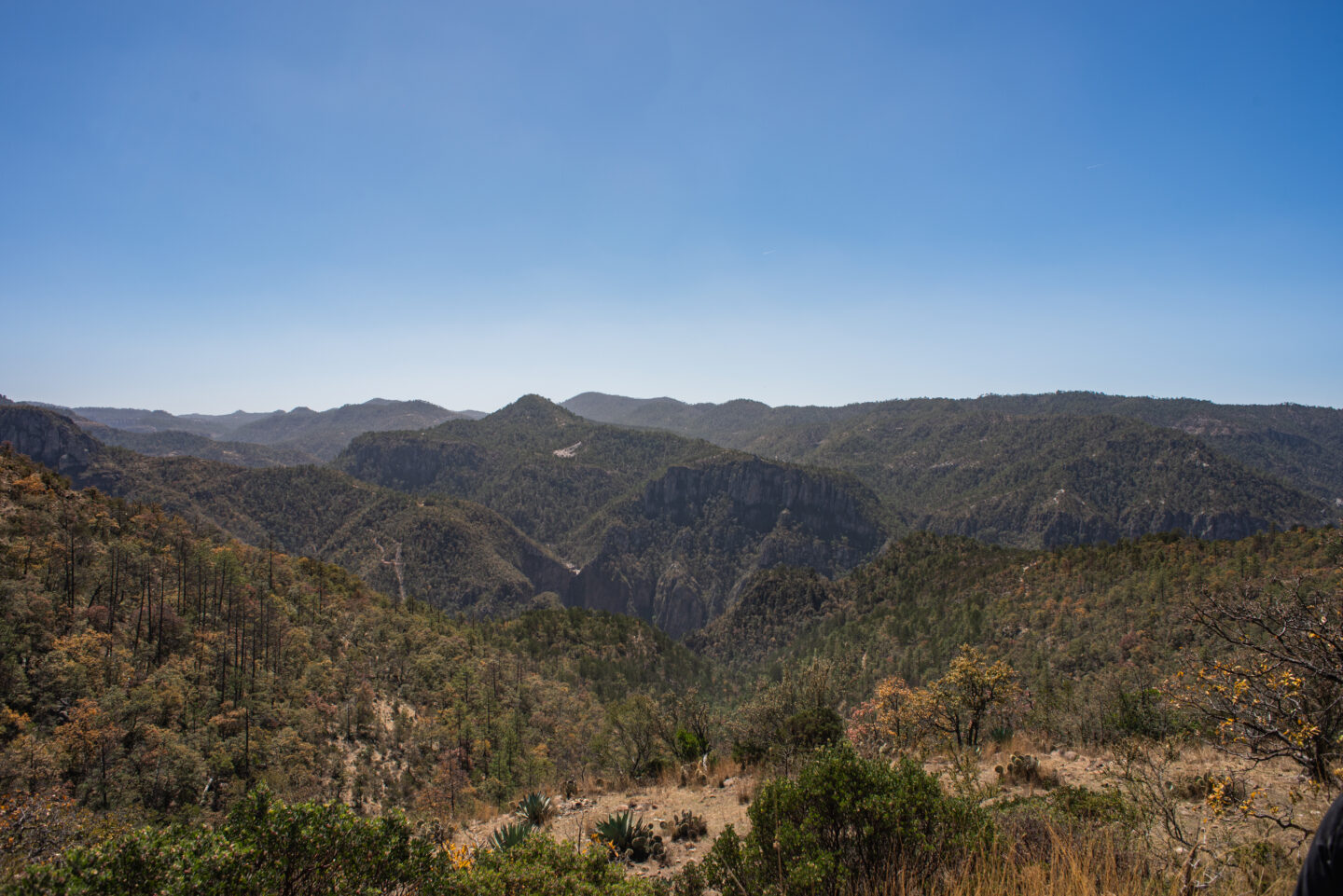
Beyond the economics, what stayed with me is how directly people connected their own lives to the forest around them. Several described growing up in it, and when I asked what it would mean if the forest were to disappear, more than one answer came back the same way: their life would go with it. That connection isn’t sentimental decoration, it’s also clear-eyed. People here have watched the forest change over the years, not always for the better, which is precisely why the technical support that comes with the project is something they engage with directly rather than tolerate at a distance.
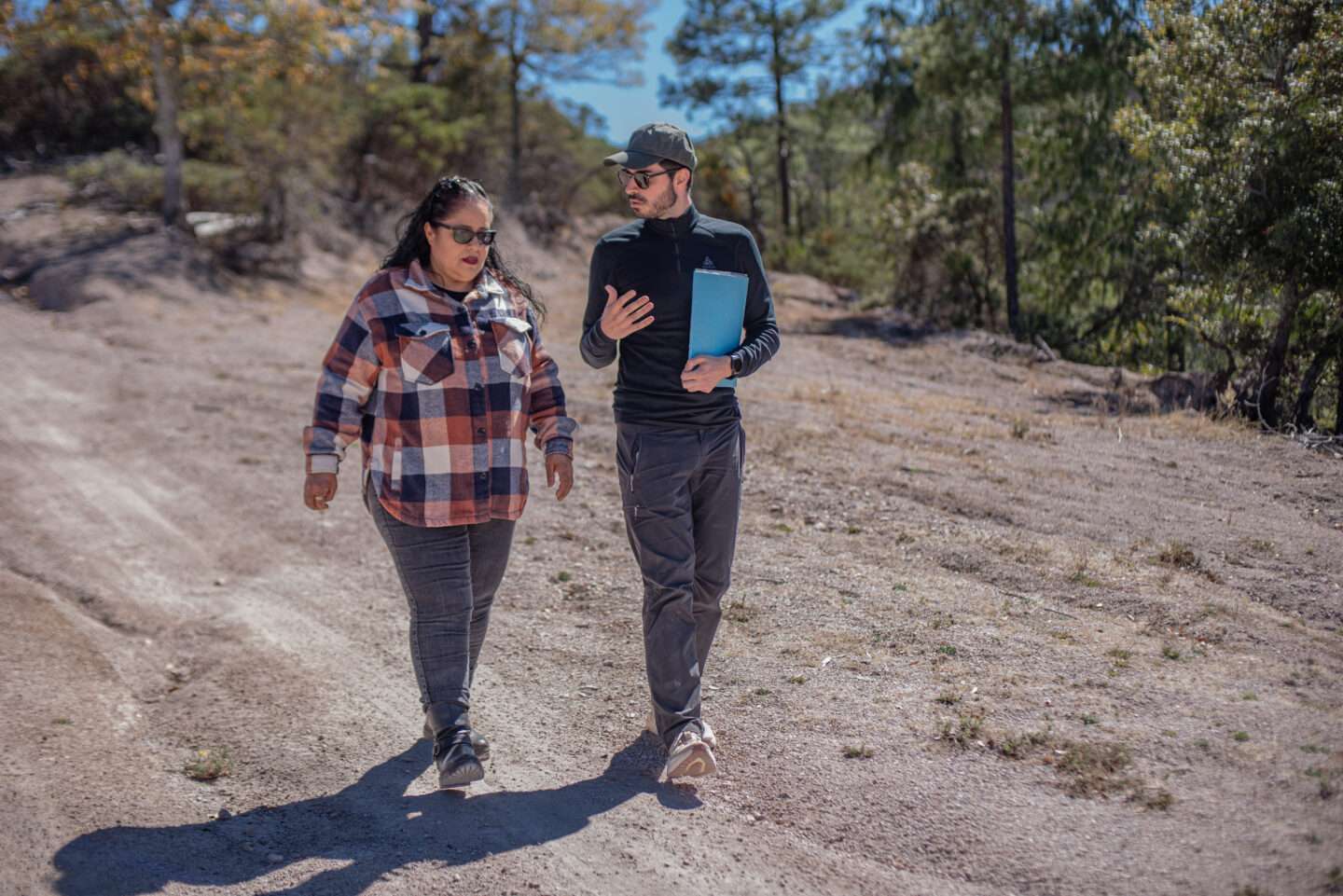
That same clear-eyed quality showed up when I asked what people would want to build if they could. Pride in the land coexists with a hard economic ceiling on what these communities can currently do with it, and the answers were specific, not aspirational slogans. José Fredy Cano Fragoso, communal land commisionner, said: “The most urgent needs across the different communities have to do with access to water – that’s an area where we could look at sustainable options. Some communities also don’t have electricity, so it would be good to invest in that too, since it’s clean energy. Beyond that, road conditions deteriorate a lot, and fixing them can be very costly.” One community sits near one of Mexico’s largest waterfalls, currently undeveloped for tourism, which came up as an opportunity they would like to pursue on their own terms.
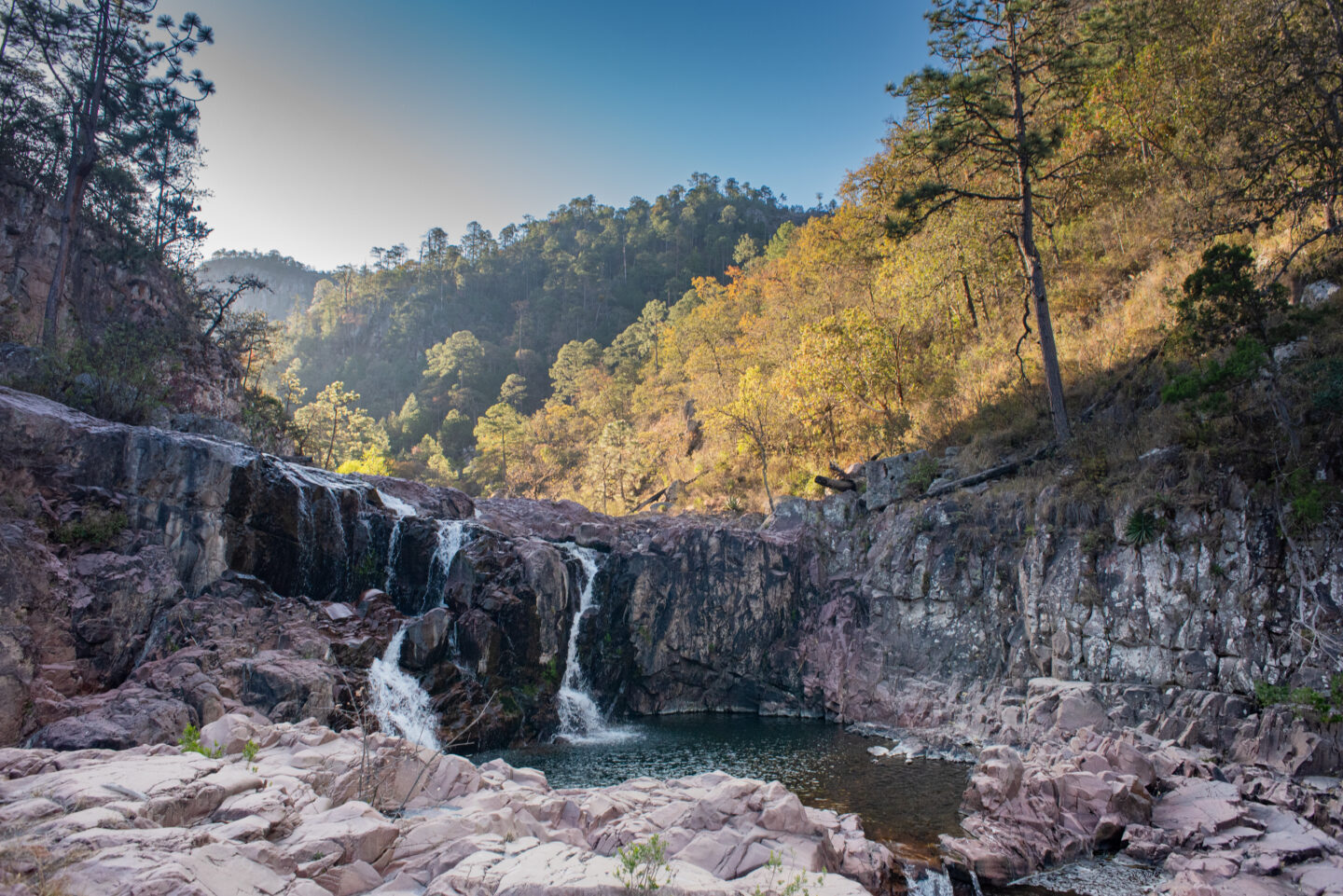
That list is not disconnected from the carbon project, it’s close to the point of it. Part of the revenue Mariposa generates, through better-managed timber value chains and, over time, carbon credits, is meant to be reinvested by the communities into exactly this kind of project: water treatment and sanitation, infrastructure improvements, among other things. The harvesting limits, firebreaks, reforestation on the roughly 2,000 hectares set aside for restoration, and deeper species-level knowledge are what protect the forest itself. The revenue that better management generates is what lets the three communities fund the priorities they identified on their own terms.
Hector and Abraham are forestry engineers who have worked in this specific area for more than two decades. Some of that history runs through actual kinship, family ties between the engineers and members of the communities they work with. That is worth stating plainly: they are not consultants parachuted in for a monitoring cycle. The trust between them and the three communities was not built through a project cycle, it predates the project by years.
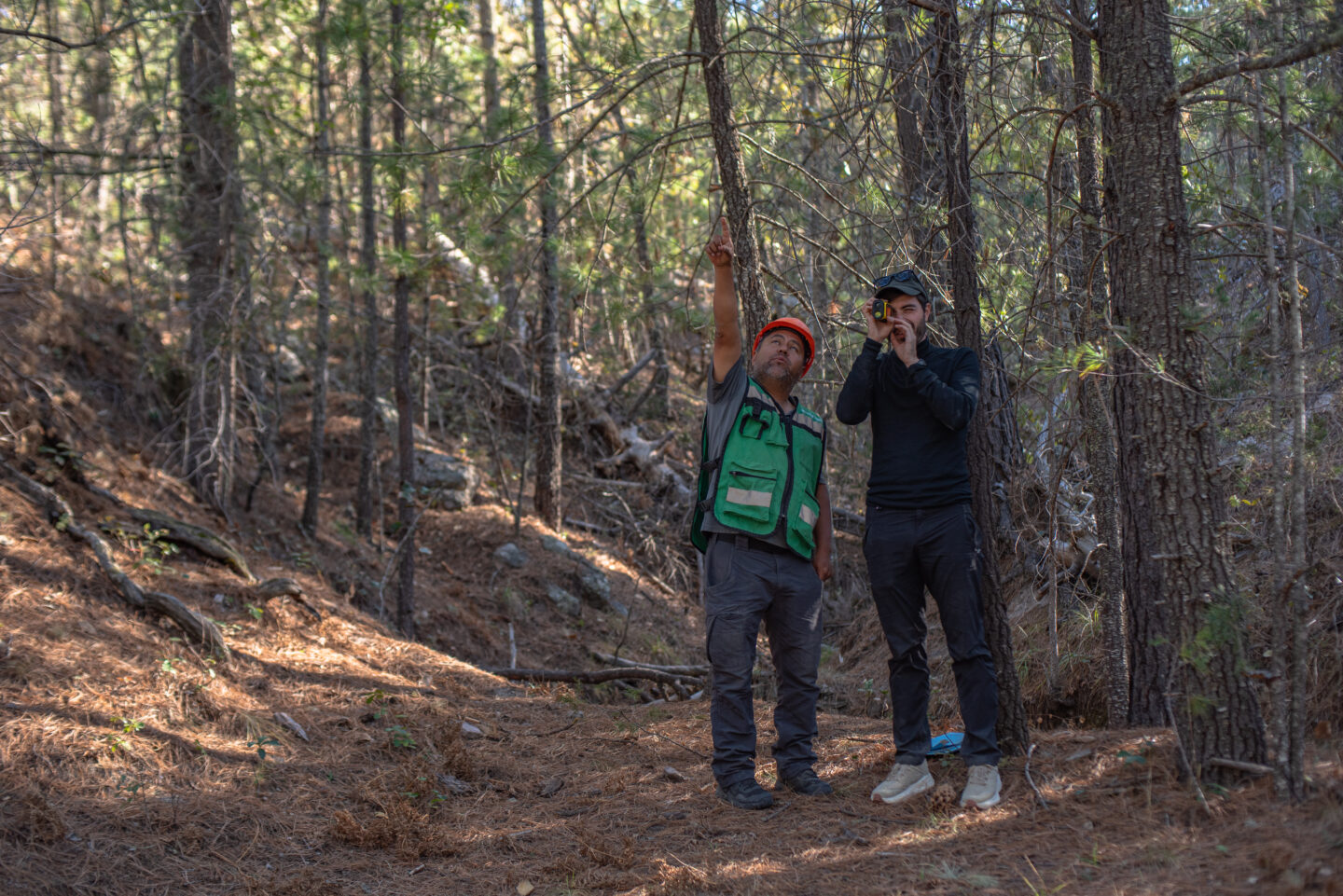
At one point Hector showed me how to measure a tree for carbon stock estimation. I got the technique wrong twice before I got it right, which tells you more about the skill involved than any description would. It is the same protocol he uses to train community technicians, and that distinction matters: what I received in an afternoon is what community members receive as an ongoing, standing relationship.
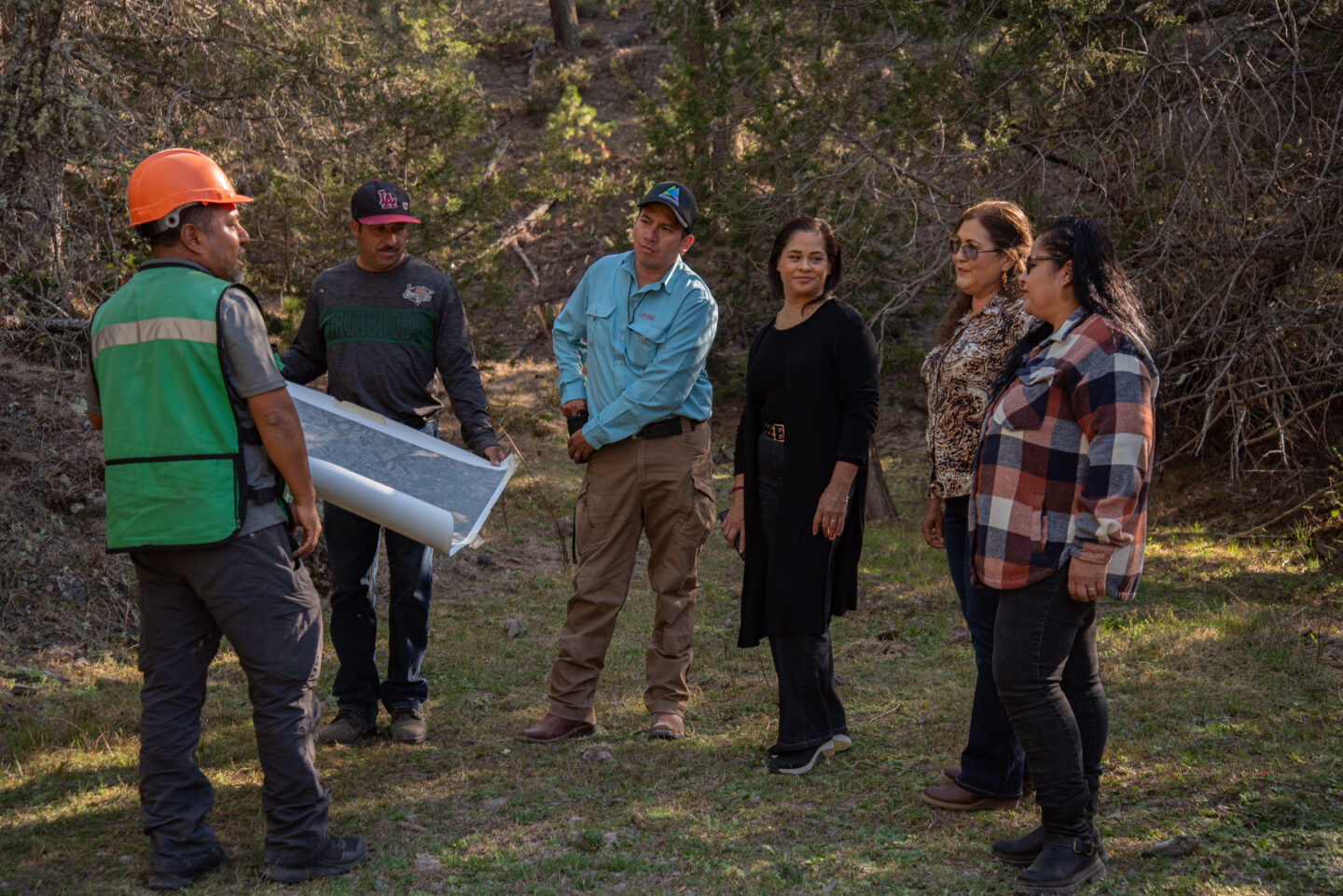
The clearest evidence of that is not something I observed, it is something that had already happened before I arrived. Hector and Abraham were present during the project’s independent field verification audit, and they have already trained members of the communities to take over parts of the project’s monitoring and follow-up themselves. That is the concrete marker of transmission, not a stated intention, a task that used to require an outside engineer and now does not, at least in part.
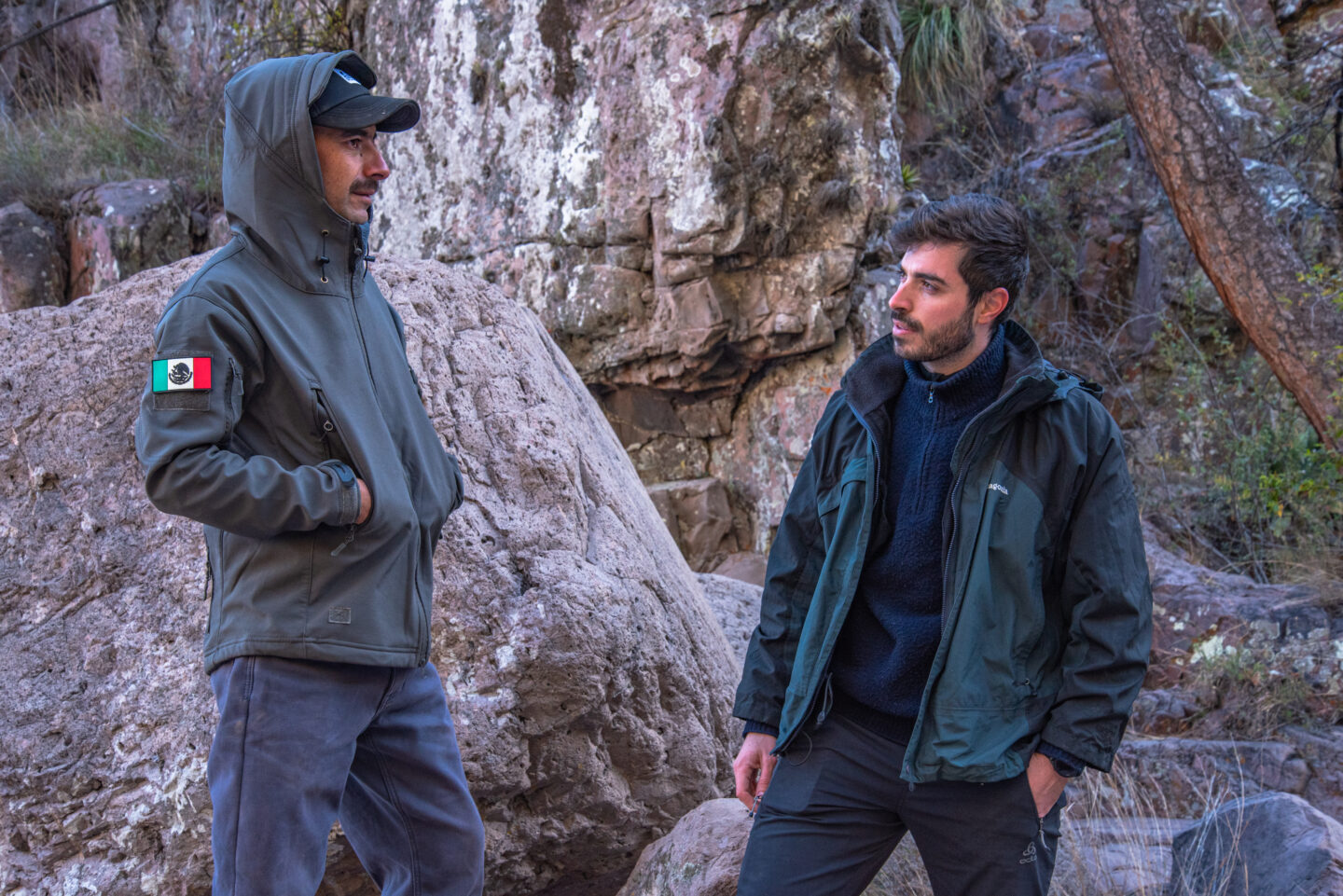
How far that autonomy extends, and how it holds up as the project scales, is something we will keep track of rather than declare finished after one field visit. What I can say from several days on the ground is that the direction is real: two engineers who are, by kinship and by two decades of shared presence, part of these communities rather than external to them, working to make their own role progressively less necessary.
None of the above substitutes for that: baseline-setting, additionality, and independent verification are what make the carbon credible. What a field visit adds is a check on whether the people implementing the project are actually doing what the documentation says; on staffing, on training, on who manages the land day to day. On Mariposa, they are. Francisco Guadarrama, General Coordinator of Montezumae Global Consultores (MGC), the company developing the Mariposa project, put it plainly: “A field visit puts milestones like certification and credit issuance into perspective. They’re important, necessary steps toward the project’s first credit sale, but they don’t tell the whole story on their own. The real implementation is in the people who walk the forest, know the land, make decisions, and take part in managing it. Once Mariposa completes the sale of its issued credits, annual operating plans and a defined financial plan will follow – and that’s when a new stage begins: turning the structure built around the project into a long-term process that keeps generating benefits for the forest and the communities that look after it.”
Want to explore how Mariposa fits in a contribution strategy? Get in touch with our team for more project documentation.