Label bas-carbone • France
Afforestation/Reforestation
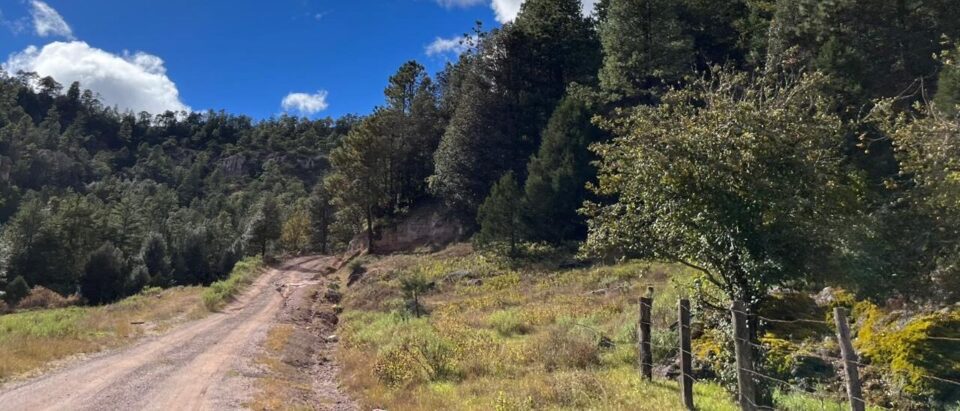
Our LBC projects span 400 hectares in different regions of France to improve the climate resilience of French forests.
Read details



Business travel is one of the few emission sources a company decides on directly. Every trip is a choice: who goes, how they travel, and how often. That makes it one of the most practical places to start acting on your footprint.
The approach follows a simple order: avoid trips you don’t need, reduce the impact of the ones you take, and take responsibility for the remaining emissions.
Under the GHG Protocol, work trips by plane, train, rental car or taxi fall under Scope 3, category 6: business travel. Hotel stays can be included too. Most Scope 3 categories are hard to influence because they depend on suppliers, customers or product use. But business travel is different, for three reasons.
The tonne of CO2 that is never emitted is always the best one. Start by asking, trip by trip, whether travel is needed at all:
When a trip is worth it, the way you travel still makes a big difference:
Even with all of this, some emissions do remain. Rail emits far less than flying, but not zero; taxis and hire cars still add up, and some flights may still sometimes be worth taking. So, what can you do?
What’s left is the part of your footprint you can’t cut yet. Rather than leave it unaddressed, you can fund climate projects in proportion to it, so the emissions you can’t avoid still drive real climate action.
In the example below, by year 2 the company has already cut 150 tonnes from its baseline. For the 850 tonnes it still emits, it can set aside a budget to purchase the same volume of carbon credits from climate contribution projects.
Take a company whose business travel emits 1,000 tCO2e in year 1:
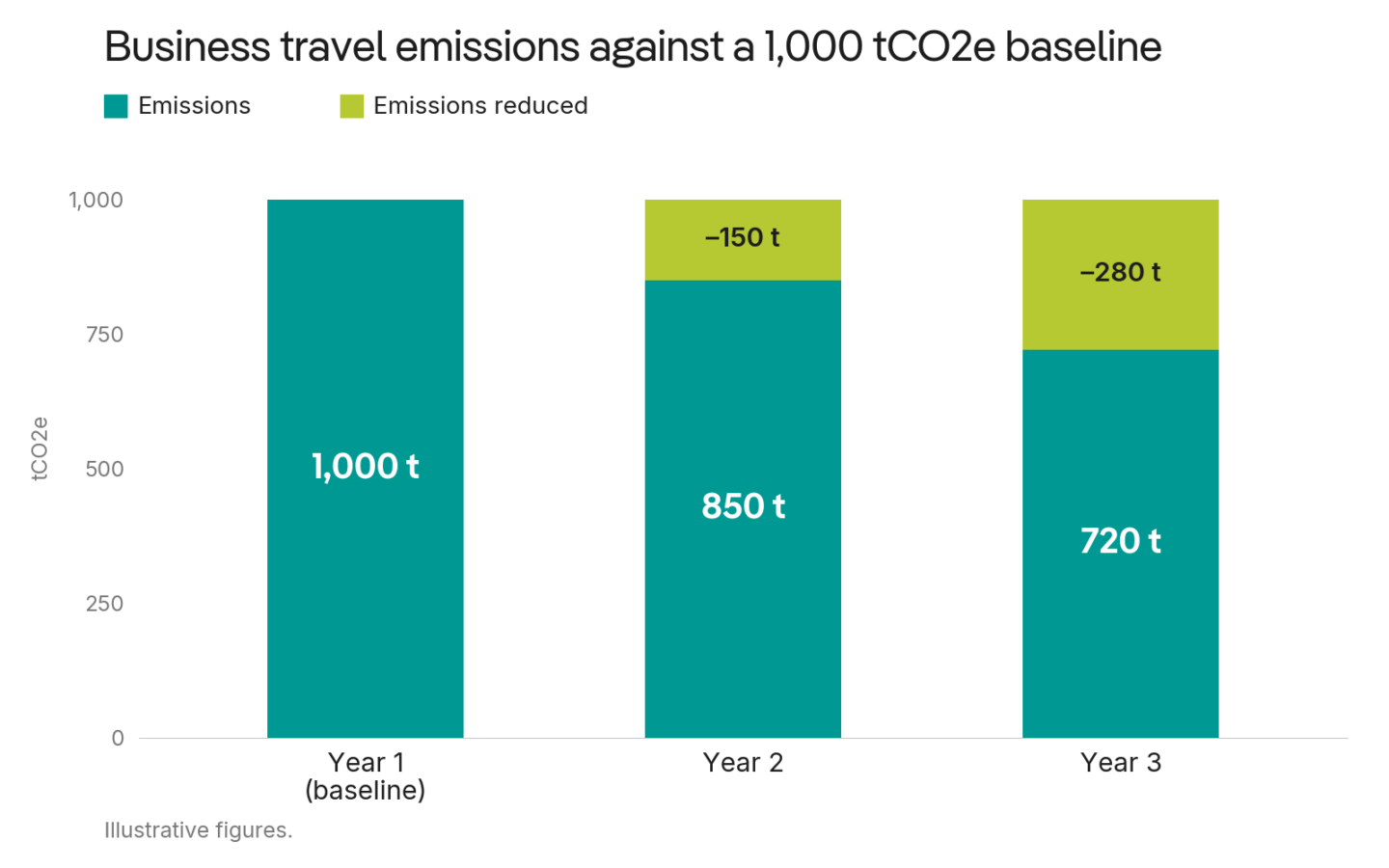
Every tonne that year is taken responsibility for. And as the cuts grow, the contribution can shrink: the cost goes down as your travel policy does its work.
Your travel emissions stay in your carbon inventory, reported in full; of course, they are not an excuse to travel more. The credits are retired in your company’s name, with full traceability, and reported separately.
Carbon projects broadly fall into three families.
Many companies combine several types, depending on their budget, the regions that matter to them, and the benefits they want to support beyond carbon. Here are some examples from our own portfolio:
Based in France? French companies can choose Label Bas Carbone projects. We develop more than 50 afforestation and reforestation projects across the country, so you can support one close to your own sites and operations.
Yes. Under the GHG Protocol, business trips in vehicles your company doesn’t own or operate, such as flights, trains, rental cars and taxis, are Scope 3. Travel in company-owned or leased vehicles and aircraft is Scope 1.
Usually in one of three places: your travel agency or booking platform, which often report CO2 per trip; your carbon accounting tool, if you use one; or your expense data, converted with standard emission factors such as ADEME’s Base Empreinte.
Yes. Many companies start with the current year and also take responsibility for the previous one, especially when closing their annual numbers.
No. Your flights still emitted what they emitted, and that figure stays in your carbon report. What changes is that you have also funded climate projects for those tonnes. You end up with two separate numbers: what you emitted, and what you financed to balance your emissions.
It uses the same instrument, carbon credits, but not the same claim. Offsetting subtracts the credits from your emissions to claim that the impact has been cancelled out. Since 27 September 2026, EU consumer law no longer allows companies to claim that a product or service is carbon neutral on the basis of offsetting, which is why more and more companies take the contribution approach. Balancing your emissions keeps them in your inventory, reported in full, and presents the credits as a separate action.
It depends on the project and the volume. As an example, our Mariposa credits start at €16 per tonne. A return Paris to New York flight in economy emits around 1.9 tCO2e per passenger, including contrail effects. A company whose teams take 100 such trips a year emits around 190 tCO2e, so contributing for all of it with Mariposa would cost around €3,000 a year.
Contact us for a quote based on your own travel!
Before year-end, take responsibility for this year’s business travel, and last year’s too. Avoid and reduce what you can and let us help you act on the rest!