
Bissap • Benin
Improved cookstoves
Deployment of 150,000 improved cookstoves to reduce wood consumption and indoor pollution while supporting community development.
Read details



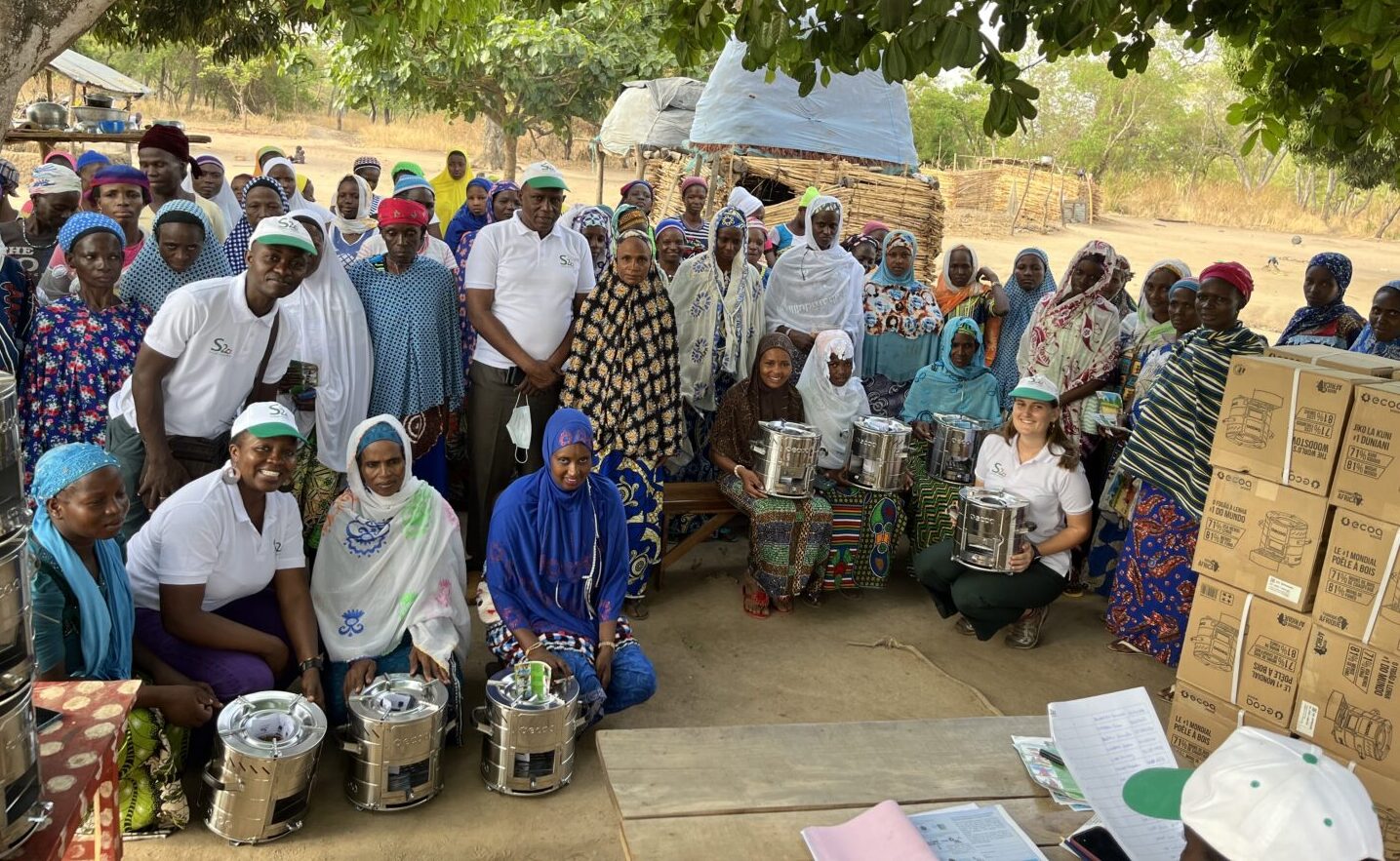
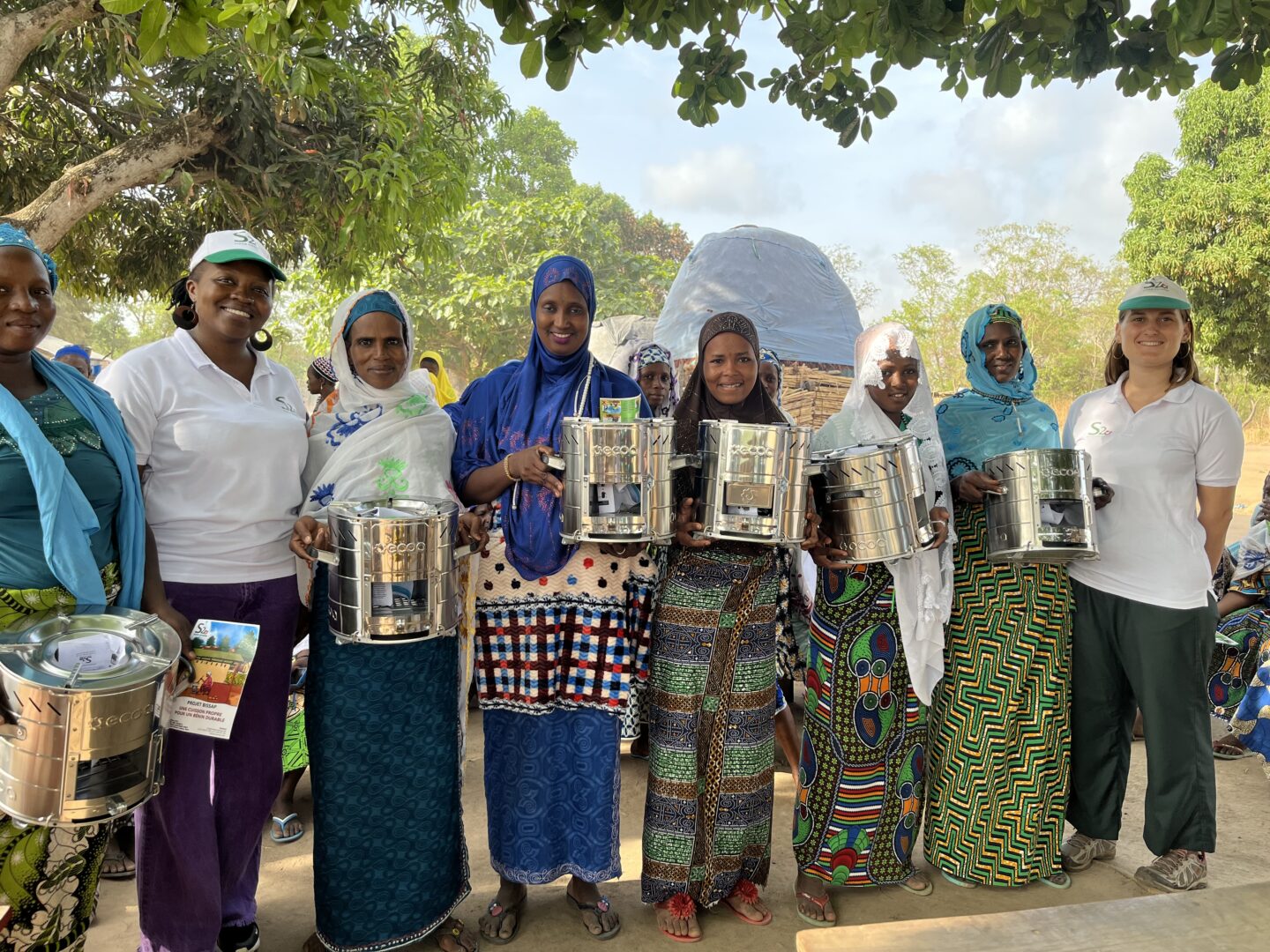
Mobilizing carbon finance to provide 150,000 households with access to clean cooking is the goal of the Bissap project. Registered on Gold Standard, the project operates in Benin and is led by hummingbirds and its partner S2 Services. It was designed using a uniquely community-based approach, drawing on feedback from participants and continues to evolve to closely meet their needs. Bissap will prevent 2.1 million tons of CO2e emissions over 10 years and preserve the equivalent of 45,000 hectares of forest.
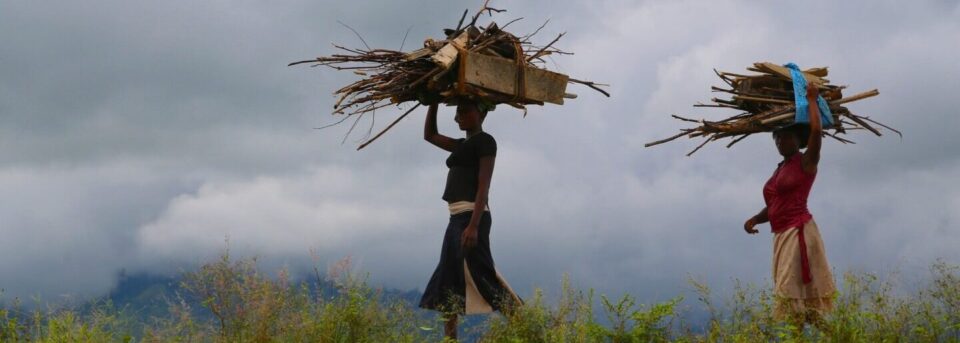
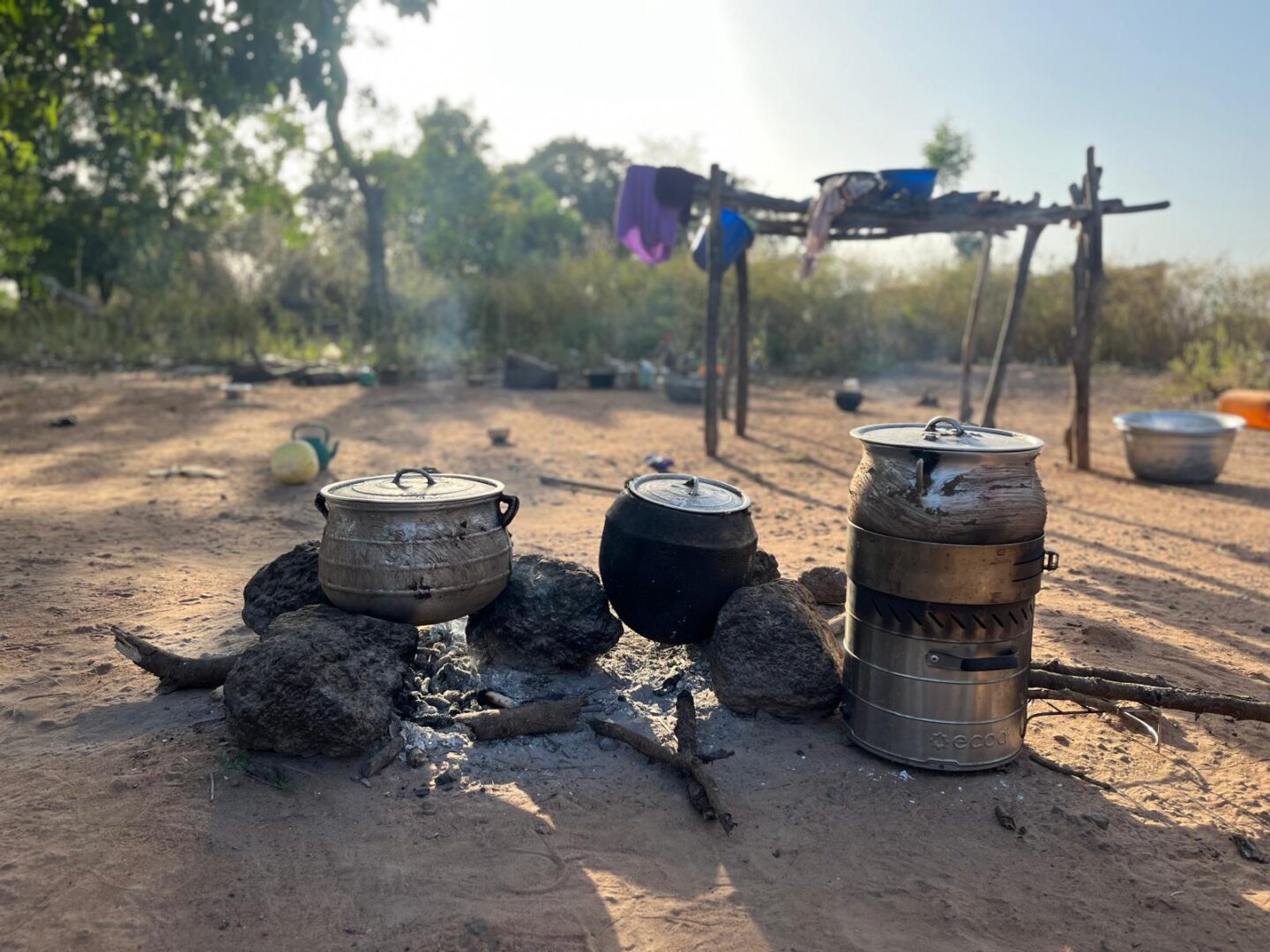
Today, 2 billion people (nearly a quarter of the global population) still cook using traditional methods that rely on biomass (IEA, 2025). The use of biomass increases pressure on forest resources and harms the health of its users, who are generally women. For women and girls, the burden is twofold: in addition to being particularly exposed to cooking smoke daily, they spend a significant part of their day gathering wood, which keeps them away from school or income-generating activities (IEA, 2025).
In Africa, the situation is particularly concerning, as 4 out of 5 households do not have access to clean cooking facilities. This trend is not expected to reverse (AFD, 2020). Due to population growth in the region, the use of biomass for domestic cooking is likely to continue to increase. This is a public health issue, as respiratory infections are the second leading cause of premature death in many countries in the region. But it is also an environmental issue, as it is estimated that 1.3 million hectares of forest are lost each year due to the use of biomass for cooking. If we add to this the greenhouse gases generated by cooking, the lack of access to clean cooking is responsible for a quarter of energy-related CO2 emissions in Africa (IEA, 2025).
In Benin, only 6% of the population has access to clean cooking (WHO, 2021). In the country, 73 out of every 100,000 deaths are due to lower respiratory tract infections, making it the second leading cause of premature death after malaria (WHO, 2021). The country’s goal is to achieve 50% access to clean cooking solutions by 2030, by facilitating access to improved stoves for more than 800,000 households (Mission 300,2025). Therefore, carbon finance is now one of the main drivers of investment in the sector.
The Bissap project is part of this joint effort to promote access to clean cooking. It covers the 5 main rural regions of Benin with operations already started in Borgou, targeting households that still use traditional three-stone stoves. To ensure distribution and monitoring of beneficiary households, the project relies on a network of community agents trained in the principles of carbon finance and the challenges of clean cooking. These agents are responsible for identifying households eligible for the projects and raising awareness of the benefits of improved stoves, which will enable to consume less biomass, reduce cooking times, and be exposed to less smoke. They keep track of clean cookstoves distribution and monitoring in S2bi, an application developed internally to access operations data in real time. S2 Clean Cooking employees are proud of this project, which creates jobs and is open to young people. Bissap will create 150 jobs, 40% of which will be for women.
“This project will greatly help us protect our environment while also creating jobs for young people in Benin.”
Clément KOUAGOU, Department Coordinator, 32y old, Parakou
Once households have received their stoves, field agents follow up regularly and visit them at least 4 times a year. The aim is to support households in their transition to new cooking tools and to address any obstacle they may encounter. Field agents particularly enjoy these visits, which demonstrate the positive impact of this project on households’ quality of life. Stanislas Atchawe, field agent at N’Dali, shared his enthusiast with us: “What I like most about this work is that during distribution and monitoring, I get to see these women happy to use the stove, or when they want to receive the Bissap stove from me or from us.”
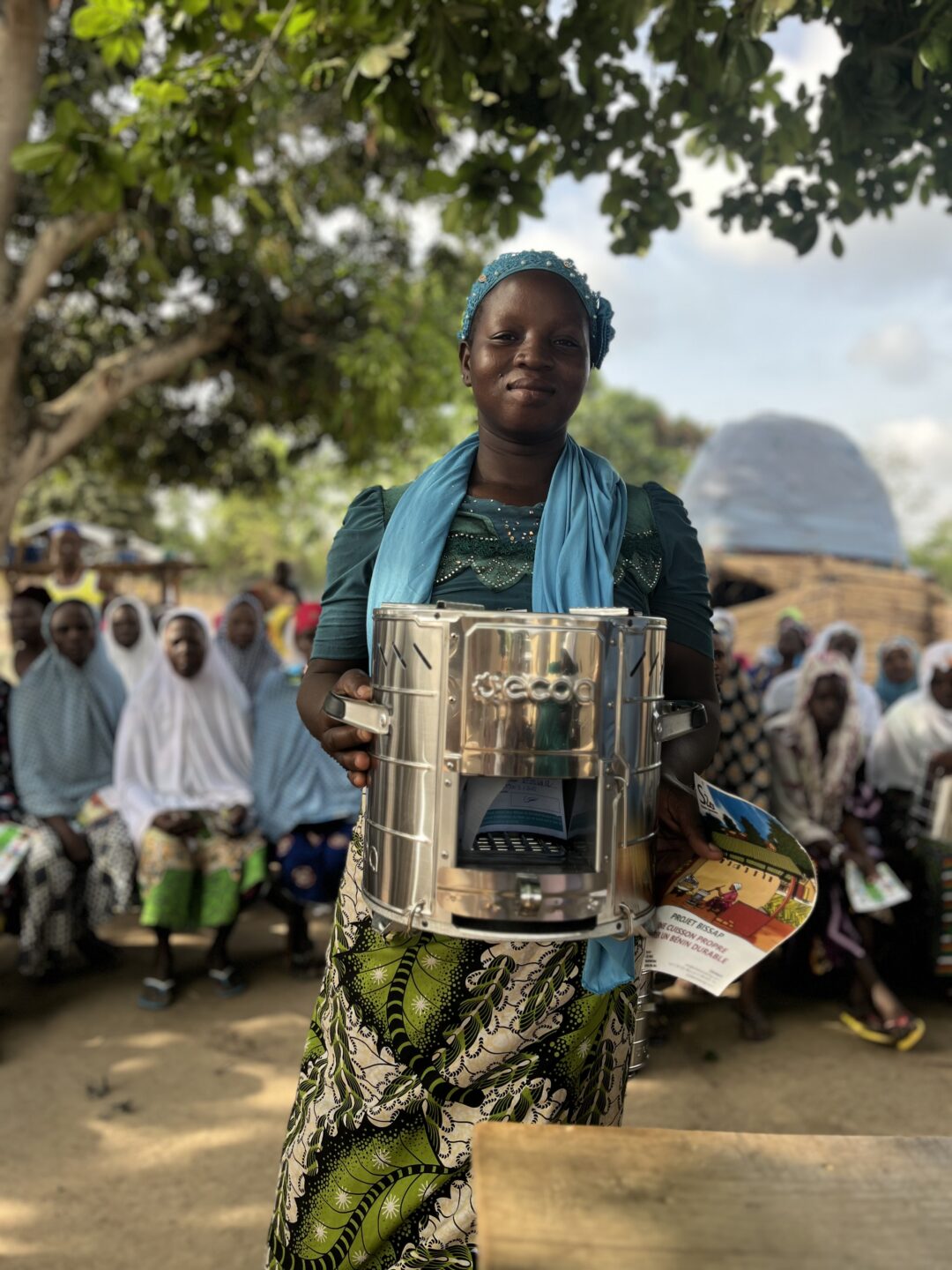
Women, who are the primary beneficiaries of the project, are the first to notice the benefits to their well-being. Alima Abdoulaye, 40 years old, based in N’Dali, immediately noticed a positive impact on her finances, as she now needs to buy less wood: “I am very happy to have received the stove and thank you again. I am saving the extra money to buy cloth. Before, it was difficult to give my child money for school. Now I can do that and use the money for other things at home.“.
She is not the only one to notice the savings she is now making. Saouda Soumanou also shared her experience with us: “I used to use three stones, but since I started using the stove, I’ve been saving money. Before, I could buy 1,000 CFA francs worth of wood, but now I only spend 500 CFA francs. I use the money I save to buy soap and detergent. The stove is good.“
For other women, the benefits translate into free time that allows them to devote themselves to personal projects, such as Belou Chabi, 27, who has launched a business: “I use the time I save [by using the Bissap stove] to either go to the fields or collect shea nuts to sell.” .
The project also includes an annual budget of €40,000 to be allocated to community projects chosen by the beneficiaries. Households are therefore once again being invited to participate in the selection process for the type of community project they consider most relevant to their locality. During the Bissap project, 3 different types of projects will be funded, selected after a consultation process with the communities. In this first phase, solar-powered water pumping systems have been requested by the communities and will be funded for priority localities.
One of the biggest challenges of the clean cooking projects is that high quality stoves are expensive and unaffordable for low income communities. Carbon finance, through the Voluntary Carbon Market and the Article 6 mechanisms, manages to monetize the emissions reductions achieved by the usage of improved cookstoves, and to scale clean cooking solutions.
However, the challenge for cookstoves carbon projects has been to prove their high-integrity over the past years. To that extent, Bissap methodological approach is more conservative than the usual market practices, addressing any risk of over-crediting. To ensure the highest level of environmental integrity, our project uses the MoFuSS tool to calculate our impact, resulting in an fNRB of 34% that represents real, permanent forest protection. The project has implemented rigorous monitoring of its operations and the adoption of improved stoves by households. Households are monitored 4 times a year by community agents who enter all their monitoring information into S2bi. This application provides access to distribution and monitoring data in real time. In addition, digital sensors have been integrated into a random sample of the distributed stoves, which allows the monitoring data to be confirmed.
Therefore, thanks to its highly conservative approach, Bissap is now eligible for the Core Carbon Principles (CCP) of the Integrity Council of the Voluntary Carbon Market (ICVCM), which has published criteria on certification methodologies for improved stove projects. The commitment to integrity at the heart of the project’s design maximizes its impact on communities and the environment, and pushes the market toward high standards of excellence.
Bissap is an example of a high-integrity project that has successfully combined local engagement with methodological rigor. It shows that working closely with local communities enables beneficiaries to adopt improved stoves more quickly. Beyond the environmental aspect, beneficiaries, supported by the field agents leadership, are empowered to reflect on how to best allocate the time or money saved by reducing wood consumption in order to improve their quality of life,