Project Bissap

Improved cookstoves

Deployment of 150,000 cookstoves in Benin

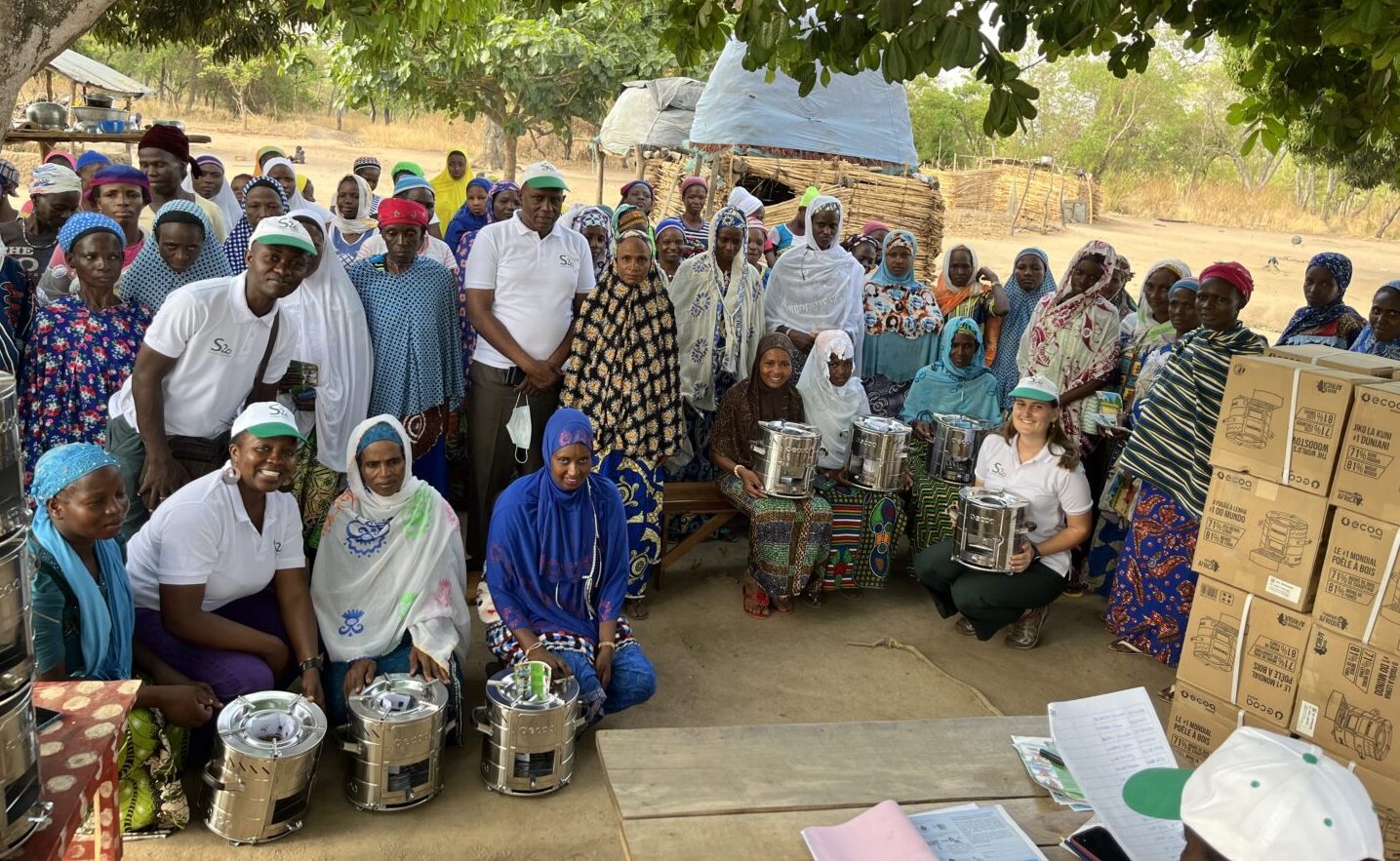
The Bissap project, developed with S2 Services, deploys 150,000 improved cookstoves across rural Benin. Women in rural communities often cook on the traditional “three-stone fire”, an open wood fire that is thermally inefficient, harmful to health and a driver of forest degradation. Improved cookstoves cut daily wood consumption, which reduces pressure on forests, saves women time spent collecting wood and cooking, and lowers indoor air pollution. A €40,000 annual envelope funds community projects selected through consultation with the communities. The project is registered with Gold Standard (GS12589), with a crediting period starting in 2025 and first credit issuance in 2026.
Activities
  • Cookstove promotion: Deployment of 150,000 intermediate improved cookstoves designed for local cooking practices
  • Women's time savings: Significant reduction in wood collection and cooking time enabling other productive activities
  • Community projects: 40 000€/year envelop to invest in community projects selected through consultations with the communities
  • Impact & evolution
    150,000
    improved cookstoves distributed
    2,500,000
    CO2e emissions avoided over 10 years
    40
    full-time permanent jobs created

    Standards

    Gold Standard Logo

    Start year of operations

    2025

    First credit issuance

    2026

    Partnership with

    S2 Services logo

    Saouda SOUMANOU

    Bissap improved cookstove user, 45 years old, Parakou
    I used to use three stones, but since I started using the stove, I've been saving money. Before, I could buy 1,000 CFA francs worth of wood, but now I only spend 500 CFA francs. I use the money I save to buy soap and detergent. The stove is good.

    Sustainable Development Goals

    Measurable impact on health by reducing indoor pollution

    Time savings for 150,000 women through reduced fuel collection and cooking time
    Creation of 40 full-time equivalent jobs in manufacturing, distribution, and training

    Up to 2.5m tCO2e avoided over 10 years through reduced biomass burning
    Reduction of pressure on forest ecosystems through decreased wood consumption

    Let’s talk

    contact us
    chevron-rightarrow-right

    Cookies help us provide you with a secure and reliable experience. Some cookies are essential, while others help us improve our services.

    Accept All Accept Required Only